
Vitamin D, clearly dosed
Vitamin D contributes to normal function of the immune system, maintenance of normal muscle function, maintenance of normal bones and normal absorption/utilisation of calcium and phosphorus.
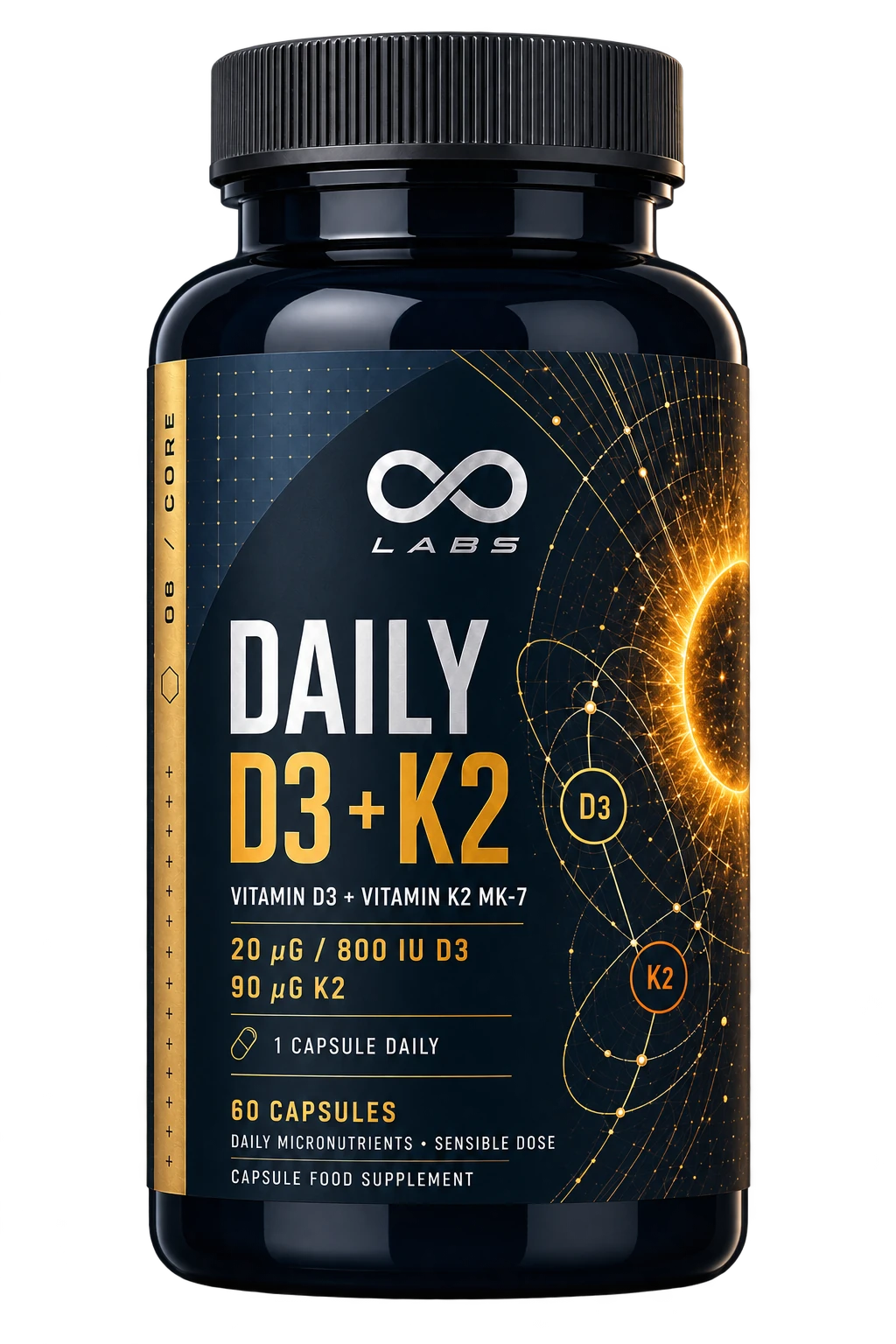
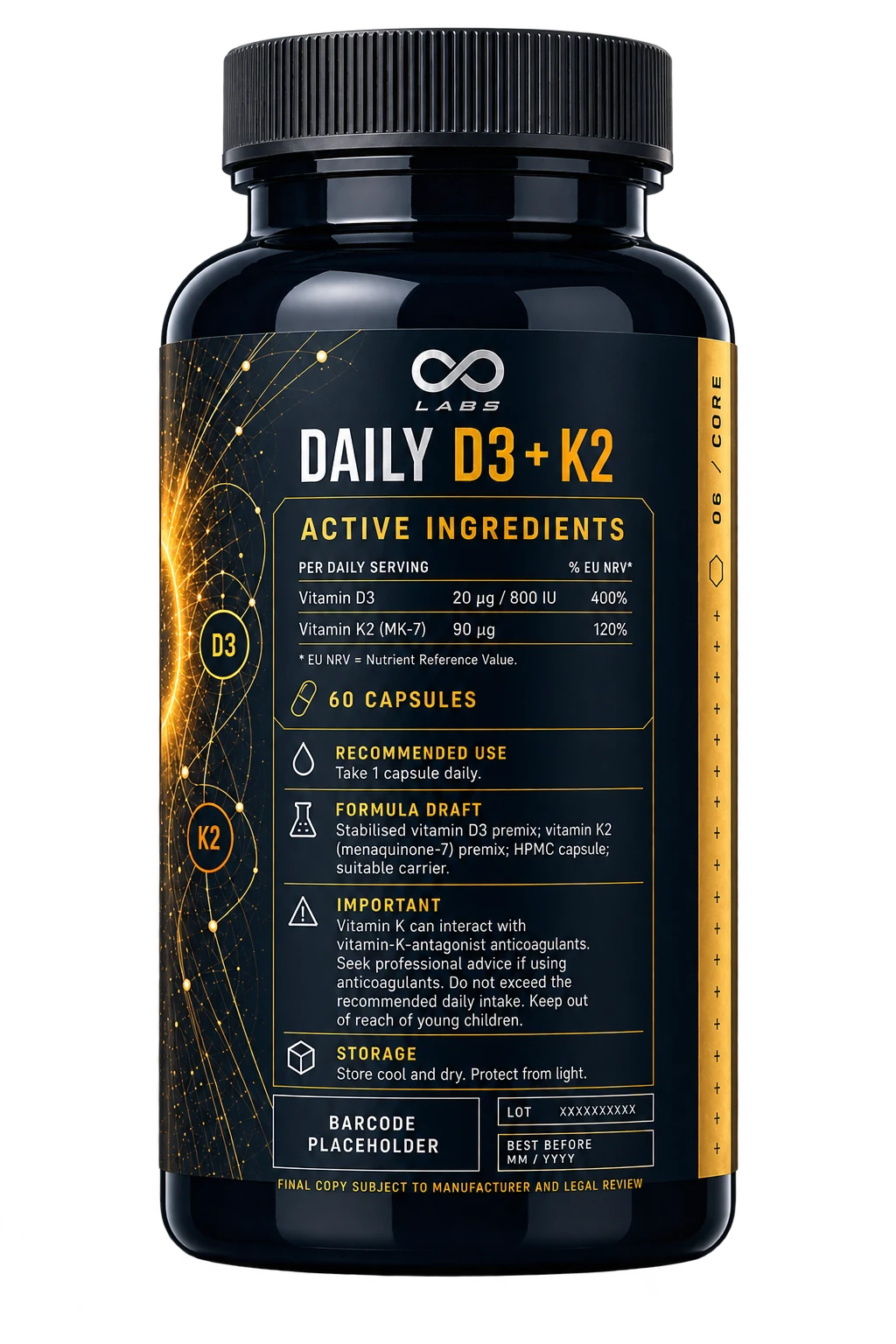
Two fat-soluble micronutrients in one straightforward daily capsule.
Vitamin D contributes to normal function of the immune system, maintenance of normal muscle function, maintenance of normal bones and normal absorption/utilisation of calcium and phosphorus.
Vitamin K contributes to normal blood clotting and the maintenance of normal bones.
One capsule provides 20 µg vitamin D3 and 90 µg vitamin K2 (MK-7), with the dose shown plainly rather than buried inside a blend.
| Ingredient | Per serving | EU NRV* |
|---|---|---|
| Vitamin D3 | 20 µg / 800 IU | 400% |
| Vitamin K2 (MK-7) | 90 µg | 120% |
*EU NRV = Nutrient Reference Value. “—” means no EU NRV is established. Final commercial copy must match the manufacturer-approved specification and legal review.
What we can explain now — and what will only be claimed once a real production batch can prove it.
One capsule provides 20 µg (800 IU) vitamin D3 and 90 µg vitamin K2 as MK-7. The amounts are stated individually rather than hidden in a blend.
Vitamin D3 is cholecalciferol. MK-7 is a menaquinone form of vitamin K2 used in supplements; available human data indicate it is absorbed and has a longer half-life than vitamin K1, but we do not present that as proof of superior health outcomes.
20 µg vitamin D is 400% of the EU NRV and one-fifth of EFSA's adult vitamin D UL of 100 µg/day. 90 µg vitamin K is 120% of the EU NRV; EFSA has not established a vitamin K UL.
Authorised EU claims include vitamin D's contribution to normal calcium/phosphorus absorption, normal bones, muscle and immune function; vitamin K contributes to normal blood clotting and maintenance of normal bones.
Facility, country of manufacture and verified quality certifications will be published after the commercial manufacturing agreement is finalised. We will not display certifications we cannot document.
No commercial batch exists yet, so there is no batch COA to publish. After production, the batch page is intended to show the lot number, test panel, laboratory, test date and report where available.
No lab report is displayed until a commercial batch exists and has actually been tested. Future batch records are intended to identify the lot, testing scope, laboratory and report date.
Short answers based on authorised EU claims, safety guidance and human research — without turning uncertainty into marketing.
They are combined for a simple daily routine. Each nutrient has its own established physiological roles; we do not claim that they must be taken together for either one to work.
20 µg equals 800 IU. It is below EFSA's adult tolerable upper intake level of 100 µg/day and provides a clearly stated daily amount.
MK-7 is one of the better-studied vitamin K2 forms used in supplements. It is well absorbed and has a longer circulating half-life than vitamin K1 in human data, but evidence does not justify claiming universal superiority for every outcome.
Vitamin K can seriously interact with vitamin-K-antagonist anticoagulants such as warfarin. If you use one, discuss vitamin K supplements with your clinician or pharmacist before use.
No. Vitamin D has a tolerable upper intake level. More than needed is not automatically more beneficial, and excessive long-term intake can be harmful.
Take 1 capsule daily.
Take with a meal; fat-soluble vitamins are commonly taken with food.
Vitamin K can interact with vitamin-K-antagonist anticoagulants. Ask your clinician or pharmacist before use if you take these medicines.
Food supplement. Do not exceed the recommended daily intake. Food supplements should not replace a varied, balanced diet and healthy lifestyle. Keep out of reach of young children. Vitamin K can interact with vitamin-K-antagonist anticoagulants.
Compare the full launch collection and choose the routine that actually belongs in your day.